Outdoor Living and Landscaping Integration
Outdoor Living and Landscaping Integration
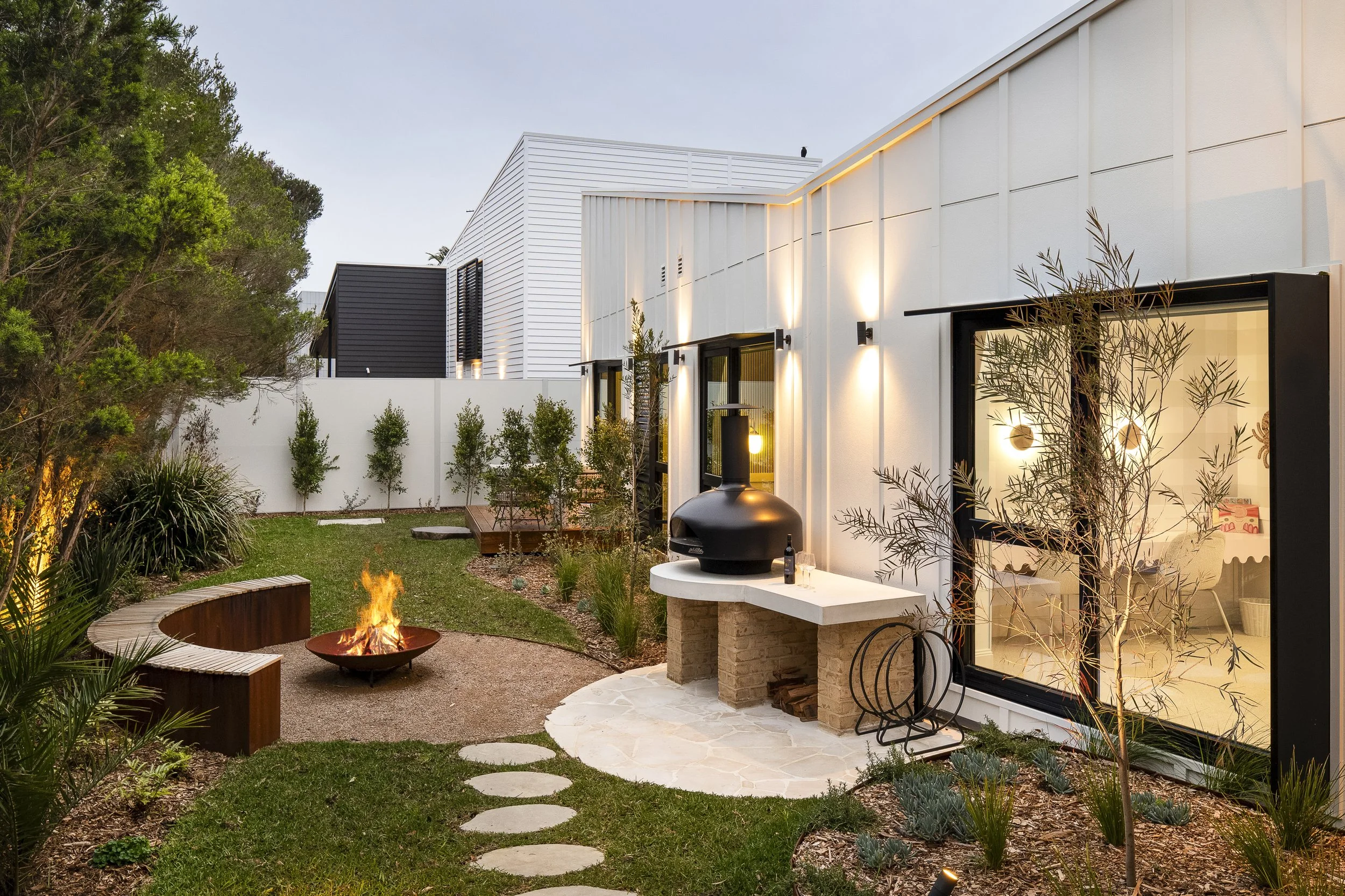
At TEMSEA Building Group, the spaces outside a home are as important as the rooms inside. The Mornington Peninsula's natural landscape sets the stage for outdoor living, and getting the integration right between the built home and the surrounding land determines whether a property feels whole or disjointed. The best custom homes don't sit on their sites; they grow from them : as we explore in Modern Beach House Design on Mornington Peninsula. Let's explore how to plan outdoor spaces, choose materials, and integrate landscaping so the finished home reads as one unified design.
Decks, Patios and Outdoor Rooms
Outdoor living spaces extend the home and create transition zones between interior and landscape. A deck or patio starts as a practical platform for entertaining or relaxing, but its design, material, and relationship to the house set the tone for how the entire property feels. A deck that wraps a corner captures morning sun and afternoon shade. A patio that sits one step down from the house level feels integrated rather than tacked on. A pergola or pavilion creates shelter while maintaining connection to the sky and views.
The choice of material matters as much as the design. Timber decks are warm and natural but require maintenance (sealing, replacing boards, managing moisture). Composite decking is low-maintenance but can feel plastic if the color and texture aren't carefully chosen. Pavers and poured concrete offer durability and flexibility in design. Stone (travertine, bluestone, granite) reads as premium but costs more and can be slippery when wet. We choose based on the home's architectural style, the climate exposure, and how much maintenance the owner is willing to commit to : see our related guide on what to know about adding pools and decks. A deck that sits in a rain shadow behaves differently than one that faces north and copped full sun all summer.
Native Planting and Local Ecology
Landscaping is not a finishing touch; it's part of the home's strategy for long-term performance. Native plants that suit the Mornington Peninsula's soil and climate thrive without constant irrigation, fertilizer, or pest management. They also support local wildlife and look right in the landscape. Exotics (imported species) often struggle here, require water in dry summers, and don't feel part of place.
A planting plan that works with the site's existing conditions outperforms one that fights them. If the site drains poorly, choose plants that tolerate moisture. If the site is exposed to wind, choose species that hold their form in wind. If the site is shaded by mature trees, choose understory plants rather than trying to force sun lovers into shadow. We typically start with a survey of what's already on the site (existing trees, soil type, drainage patterns, wind exposure) and build a planting plan that works with those conditions rather than against them. Establishing plants while they're young, with consistent watering and mulching in the first season, is far cheaper than replacing mature plants that never took hold.
Terracing, Grading and Drainage Integration
A sloped site offers opportunities for outdoor living that flat sites don't. Terracing a slope creates level platforms for gardens or seating while managing water runoff. A series of retaining walls can step the landscape down and also create garden beds, seating niches, or planters. The walls themselves become part of the design language of the home when they're built with materials that echo the house (stone, timber, rendered block) : a strategy we cover in why home builders on the Mornington Peninsula are moving toward split-level designs on sloping sites.
Grading and drainage must work together. Water should move away from the house and into the landscape in a way that supports planting rather than eroding soil or pooling. Swales (shallow channels) direct water and can be planted to manage runoff. French drains collect water and move it off-site when necessary. Rain gardens (planted depressions) capture water and let it filter into the soil. These aren't cosmetic; they're essential. Poor grading around a home leads to foundation moisture problems, eroded gardens, and soggy lawns. Good grading is invisible until it's missing.
Sight Lines, Privacy and Screening
The view from inside the home to the garden shapes how the home feels. A design that frames a view through a window, a door, or a colonnade makes the garden feel like part of the home. A view that's blocked or blocked by awkward fencing feels like an afterthought. We think about sight lines during house design (which windows look at which parts of the garden, which views are worth keeping and which are worth screening) and carry that thinking into the landscape plan : a principle explored further in Mornington Peninsula: Architecture Defined by the Coast.
Privacy is equally important. A new home without screening feels exposed until the landscaping matures. Tall shrubs, trees, or strategically placed structures (screens, pergolas, shade sails) create privacy while maintaining openness to the best views. On the Peninsula, wind is often a factor, so screening also needs to be functional (breaking wind without creating a solid barrier that causes turbulence). Native trees and dense shrubs are usually better windbreaks than solid fences, which can create eddies and fail in strong winds. Our piece on acoustic zoning for open-plan privacy looks at the indoor side of this same challenge.
Working with Existing Features
The best landscapes work with what's already there. A mature tree on a site is a gift. It provides shade, character, and a sense of established place from day one. The cost of removing a healthy tree and waiting years for new planting to grow is far higher than designing around that tree. Similarly, natural creeks or wet areas aren't problems to drain away; they're opportunities for bog gardens or wildlife habitat. This is the same site-first thinking behind our custom home process, covered in What Custom Home Builders on the Mornington Peninsula Actually Deliver.
Existing grade can be worked with rather than completely regraded. A slope that means more earthworks also means better drainage and more interesting outdoor spaces. Rocky outcrops become features rather than obstacles. Native grasses and wildflowers can be encouraged rather than replaced with lawn and exotic beds. The landscape that feels most right is one that amplifies what the site naturally offers rather than imposing a generic vision on top of it.
Outdoor living and landscaping are integral to how a home performs and how it feels. If you're planning a new home or luxury build on the Mornington Peninsula and want to talk through outdoor spaces, planting strategy, and how the landscape can extend and enhance your home, get in touch with the TEMSEA team.