Modern Beach House Design on Mornington Peninsula
Modern Beach House Design on Mornington Peninsula
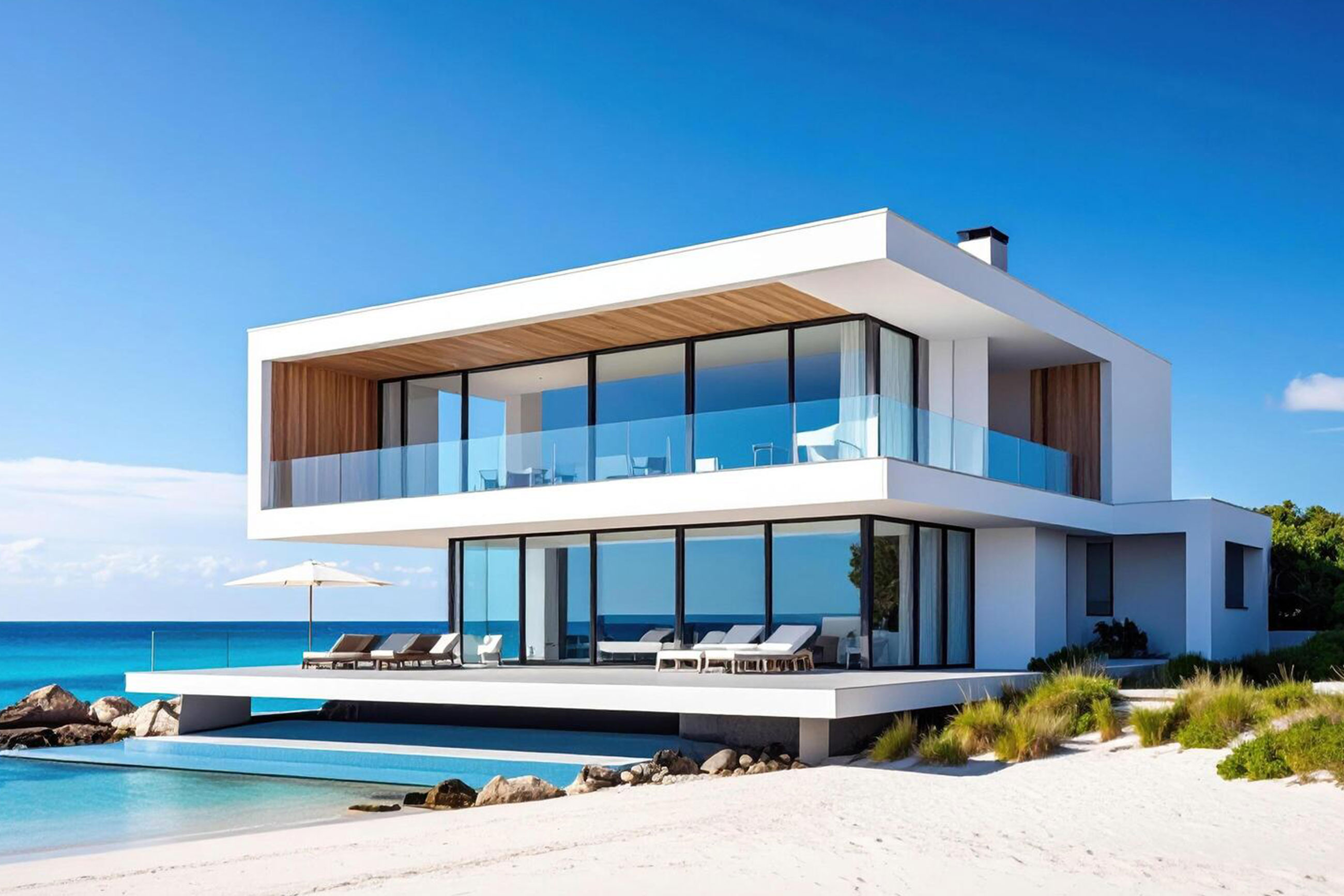
The Mornington Peninsula doesn't just offer a view. It demands architecture that responds to salt, wind, and exposure in ways that most Australian coastlines don't. This is where Port Phillip Bay's sheltered water meets Bass Strait's volatile conditions, creating a dual environment that dictates every design decision. Modern beach house designs here aren't about replicating templates from Bondi or Byron. They're about understanding how the coast operates as a force and building with it rather than against it.
Great coastal architecture on the Mornington Peninsula is a balance of visual sophistication and structural intelligence. It's about knowing when to open a wall to capture a vista, and when to close it to block prevailing winds. It's about selecting materials that can withstand decades of salt exposure without constant intervention. And it's about working with topography that shifts from rolling hinterland to exposed clifftop within minutes.
This isn't casual weekend architecture. It's permanent residence architecture for clients who understand that longevity matters as much as aesthetics.
The Evolution of Modern Beach House Designs
There's a clear lineage on the Mornington Peninsula. Thirty years ago, beach house designs meant fibro cottages built for weekends, not permanence. Homes were lightweight, temporary, and designed for seasonal coastal living. That era is over.
Today's modern beach house is a year-round residence. It's designed for families who work remotely, entertain regularly, and expect the same level of refinement they'd find in metropolitan Melbourne. The shift in client expectations has driven changes in material choice, spatial planning, and construction methodology.
The aesthetic that defines this evolution is known in the industry as coastal minimalism. This isn't about stark white cubes. It's about raw concrete that weathers gracefully, spotted gum or blackbutt cladding that silvers over time, and zinc roofing that develops a protective patina. These materials aren't chosen for decoration. They're chosen for their resistance to corrosion, minimal maintenance requirements, and their visual appeal as they age.
Floor plans have evolved to prioritise the threshold between inside and outside. The old model of small windows facing the water has been replaced by full-height glazed panels that slide away entirely. Outdoor galleries, covered decks, and cantilevered terraces are no longer secondary spaces. They're primary living zones designed with the same rigour as interior rooms.
This shift reflects a deeper understanding of how coastal architecture on the Mornington Peninsula should function. It's not about maximising glass for the sake of views. It's about creating controlled openings that frame the landscape, manage solar heat gain, and protect from wind without sacrificing connection to the environment.
Engineering for Longevity: The Coastal Tech Section
Sophisticated clients on the Mornington Peninsula care about maintenance cycles. They understand that a home built improperly will require constant intervention. This is why material selection isn't aesthetic-led, it's performance-led.
Salt and wind are relentless. Untreated steel will corrode. Aluminium joinery without marine-grade coatings will pit. Standard timber cladding will warp and split. The best beach house designs on the Mornington Peninsula account for this from day one by specifying marine-grade finishes, powder-coated aluminium, and stainless steel fixings throughout.
High-performance glazing is non-negotiable. Double-glazed units with low-e coatings reduce heat transfer, minimise condensation, and improve acoustic performance. Coastal areas on the Mornington Peninsula are exposed to significant wind noise, especially during winter storms. Poorly specified glazing creates uncomfortable living conditions regardless of how beautiful the view is.
Topography is another critical factor. Many of the most desirable sites on the Mornington Peninsula involve challenging slopes. The mistake is treating topography as an obstacle. The better approach is to treat it as an asset.
Cantilevered forms that project over steep terrain minimise site disturbance, reduce the need for extensive retaining walls, and create dramatic architectural moments. A well-engineered cantilever can provide shade to lower-level outdoor spaces while maximising outlook from upper levels. This is particularly effective in areas like Red Hill, where rolling vineyard country meets coastal escarpments, or Blairgowrie, where sandy dunes require careful foundation work.
Modern beach house designs that work with rather than against the topography reduce construction costs, improve structural integrity, and deliver more compelling architectural outcomes. This isn't theory. It's a proven methodology.
Micro-Climates: From the Back Beach to the Bay
The Mornington Peninsula isn't a single climate zone. It's a series of microclimates that shift dramatically depending on proximity to water, elevation, and exposure.
Building in Sorrento or Blairgowrie means designing for the back beach. This is Bass Strait-facing terrain, exposed to westerly and southwesterly winds that hit with force year-round. The homes in this area require powerful weatherproofing, reinforced cladding systems, and strategically placed outdoor spaces to create sheltered zones. Floor plans are often arranged to protect living areas from prevailing winds while still capturing ocean views.
Move inland to Main Ridge, and the conditions change entirely. The terrain is sheltered, leafy, and significantly cooler in summer. Homes here benefit from established tree canopy, reduced wind exposure, and a microclimate that favours passive ventilation. The design response is different. Larger openings, cross-ventilation strategies, and lighter material palettes work because the environmental loads are less aggressive.
Solar orientation matters in both contexts, but for different reasons. Bay-side homes need to balance panoramic north-facing views with harsh afternoon sun. Without proper shading, large glass panels create unbearable heat gain in summer. Deep eaves, operable louvres, and external blinds aren't optional. They're essential to thermal comfort.
Back beach homes face a different challenge. Southern exposures to Bass Strait offer dramatic outlooks but deliver minimal solar access. These homes require well-insulated envelopes, carefully positioned north-facing glass to capture winter sun, and strategic use of thermal mass to moderate temperature fluctuations.
The best modern beach house designs on the Mornington Peninsula don't apply a universal approach. They respond to site-specific conditions with precision. This level of nuance is what separates sophisticated coastal architecture from generic beach houses.
Building a Legacy on the Coast
Great architecture on the Mornington Peninsula isn't defined by one spectacular detail. It's defined by the accumulation of correct decisions, from material specification to spatial orientation to structural methodology.
It's about understanding that a home built to last decades requires rigorous engineering. It's about selecting cladding that patinas rather than degrades. It's about floor plans that work with the sun, wind, and topography rather than fighting them. And it's about recognising that the coast isn't a backdrop, it's an active participant in how the building performs.
This level of architectural thinking requires collaboration. Between architects who understand design intent, engineers who can deliver structural solutions for complex sites, and builders who know how to execute high-performance envelopes in challenging conditions.
If you're planning a build on the Mornington Peninsula, the conversation shouldn't start with style. It should start with the site. What are the wind loads? What's the soil classification? How does the sun move across the property throughout the year? These questions shape everything that follows.
At TEMSEA, we specialise in building homes that respond to the unique demands of the Mornington Peninsula coast. We work with clients who understand that great architecture is a long-term investment, not a short-term aesthetic exercise. If you're ready to discuss a site-specific build that honours the landscape and performs for decades, contact us today.