Mount Martha New Build: Joinery Installation & Internal Painting Underway
Mount Martha New Build: Joinery Installation & Internal Painting Underway
At TEMSEA Building Group, this stage of the build is where a home really starts to feel finished. On our Mount Martha two-storey new build, joinery is going in throughout the kitchen, walk-in robe, and butler's pantry, and the internal paintwork is following close behind, room by room. It's a stage that brings together two trades that have to work in lockstep: the cabinetry has to be precise enough to sit flush against freshly painted walls, and the paint finish has to be tough enough to handle ongoing site traffic until handover. For this home, the joinery package is built in laminex coloured board with vinyl wrap detailing, and the benchtops are a deliberate mix of timber laminate, porcelain, and marble, chosen zone by zone to suit how each space will actually be used. Every door and drawer throughout the joinery run is fitted with soft-close hardware as standard, a small detail that makes a noticeable difference to the everyday feel of a custom-built home.
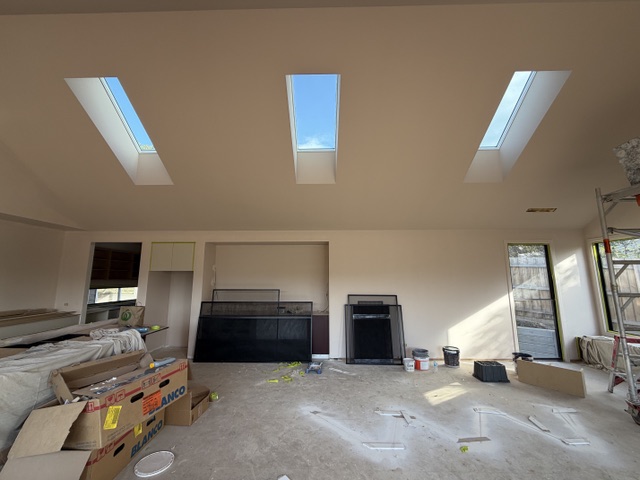
Joinery Update: Coloured Board and Vinyl Wrap
The cabinetry throughout this build uses a combination of laminex coloured board for the flat-panel runs and vinyl wrap for sections with profiled or routed detailing. Pairing the two finishes lets us get a consistent colour and texture across the home while still allowing for shaped doors and feature profiles in standout areas like the kitchen island and butler's pantry.
Soft-close doors and drawers have been fitted as the standard finish across every cabinet and drawer run. It's a small spec decision, but it has an outsized impact on day-to-day usability and the perceived quality of the joinery, and it's something we build into our luxury home builds as a baseline rather than an upgrade.
Types of Joinery Finishes: How We Choose
Joinery finish is one of the bigger decisions in any build or renovation, since it affects budget, lead time, and how the cabinetry will hold up over the life of the home. Here's how the main options compare:
- Coloured Board (Melamine): A thermally fused decorative surface over particleboard or MDF. Cost-effective, durable, and available in an enormous range of colours and textures, including timber-look finishes. Best suited to flat-panel cabinetry; not ideal for routed or curved profiles.
- Vinyl Wrap: A PVC film heat-pressed over an MDF substrate, which makes it the go-to option for shaker-style, V-groove, or curved doors. Gives a seamless painted look without the cost of 2PAC. The main risk is delamination in high-heat or high-humidity zones if it isn't vacuum-pressed correctly.
- 2PAC (Two-Pack Painted Finish): A sprayed, catalysed paint finish applied to an MDF door. This is the premium option for bespoke joinery, offering unlimited colour matching and a flawless, seamless surface. Higher cost and longer lead time, and chips can be harder to repair invisibly.
- Natural Timber: Solid timber or timber veneer doors and panels, prized for warmth, grain variation, and a genuinely natural finish. Typically the most expensive option, and it needs ongoing sealing and care to manage moisture and UV exposure over time.
For this project, the coloured board and vinyl wrap combination gave the client the design flexibility they wanted, without pushing the budget or timeline out the way a full 2PAC specification would have. It's an approach we regularly recommend across our renovation and new build projects on the Peninsula.
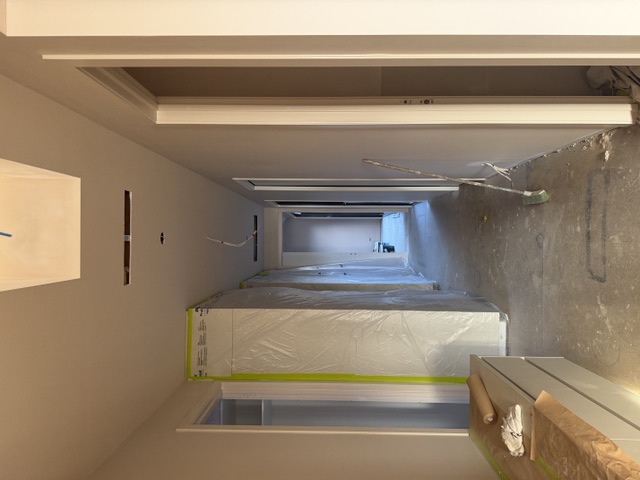
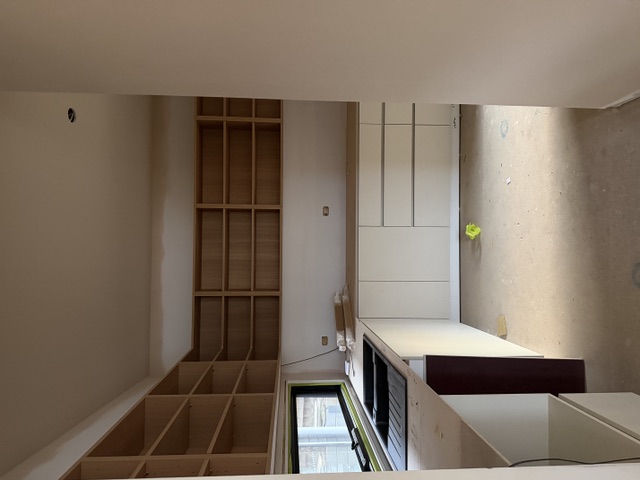
Benchtop Selections: Timber Laminate, Porcelain, and Marble
Rather than running a single benchtop material throughout the home, this project uses three different finishes, matched to how each space is used:
- Timber Laminate: Used in lower-traffic zones where warmth and a softer, natural look were the priority. Economical and available in a wide range of timber-look finishes, though more vulnerable to heat, moisture at the joins, and surface scratching than stone alternatives.
- Porcelain: Specified for the main kitchen run. Porcelain benchtops are non-porous, highly heat and scratch-resistant, and hold their colour over time, making them a strong choice for the busiest work surface in the home.
- Marble: Used as a feature surface to add visual weight and a point of difference. Marble brings natural veining and a premium look that's hard to replicate, though it's more porous than engineered stone and needs sealing and a bit more care to avoid staining and etching.
More broadly, benchtop materials fall into two camps: laminate or natural timber on one side, and man-made or natural stone on the other. Engineered stone (man-made) tends to offer the most consistent performance and lowest maintenance, while natural stone like marble or granite brings unmatched character at the cost of needing more upkeep. Working out the right mix for each zone of the home is something our team works through with clients during the design and specification stage of every build.
Interior Design: Getting the Palette Right
Joinery and paintwork have to be planned together, not in isolation. The colour and finish of the cabinetry sets the tone for the room, and the wall colour either reinforces that or works against it. On this project, we've used warmer, muted wall tones to complement the natural timber tones and coloured board joinery, keeping the palette cohesive as you move between the kitchen, pantry, and bedroom zones.
Getting this right takes coordination between the building team, the client, and our design partners early in the process, well before the first coat goes on the wall, so that the paint colours, joinery finishes, and benchtop selections all read as one considered scheme rather than a series of separate decisions.
Paint: Acrylic vs Oil-Based
Internal painting on this build is following the joinery and trade work room by room. Choosing the right paint type matters just as much as choosing the right colour:
- Acrylic (Water-Based) Paint: Quick-drying, low odour, and easy to clean up, with good flexibility that helps it resist cracking over time. It's the standard choice for most internal walls and ceilings, and increasingly for trim and doors as well, given ongoing improvements in durability and finish quality.
- Oil-Based Paint: Slower to dry and higher in odour and VOCs, but it still offers a very hard, smooth finish that some builders and clients prefer for high-traffic trim, skirting, and doors. More durable in certain high-wear applications, though it tends to yellow over time and requires solvents for clean-up.
For most of this home's internal walls, we're specifying acrylic for its durability, lower odour during a stage when trades are still working through the home, and faster recoat times, which keeps the program moving.
Following This Build
This joinery and painting stage follows on from plasterboard installation and wet area tiling, which itself followed the home reaching lock-up stage with cladding and roofing complete. It's been a steady progression from the structural and foundation works through to a home that's now starting to look and feel finished
What's Next
With joinery installation progressing and internal painting underway throughout the home, the next stage will see benchtops fitted, splashbacks installed, and final fix carried out across plumbing and electrical. We'll share more progress as this Mount Martha two-storey new build moves toward completion. To see how we approached a similar coloured board and stone benchtop combination on another Peninsula build, take a look at our Hughes Road joinery installation project. If you're planning a new build or renovation and want to talk through joinery, benchtop, or paint finishes for your own project, get in touch with the TEMSEA team.
Start your Project with Temsea
.webp)