Mount Martha Two Storey New Build: Precision Earthworks and Retaining Systems
Mount Martha Two Storey New Build: Structural Foundation Stage
Foundation work at TEMSEA isn't just moving dirt; it is precision engineering applied to coastal ground conditions. This Mt Martha two-storey build demonstrates how geotechnical assessment, cut-and-fill strategy, and retaining wall systems combine to create a stable, durable base that resists the Peninsula's variable geology, seasonal moisture, and granite bedrock.
Mount Martha Two Storey New Build: Structural Foundation Stage
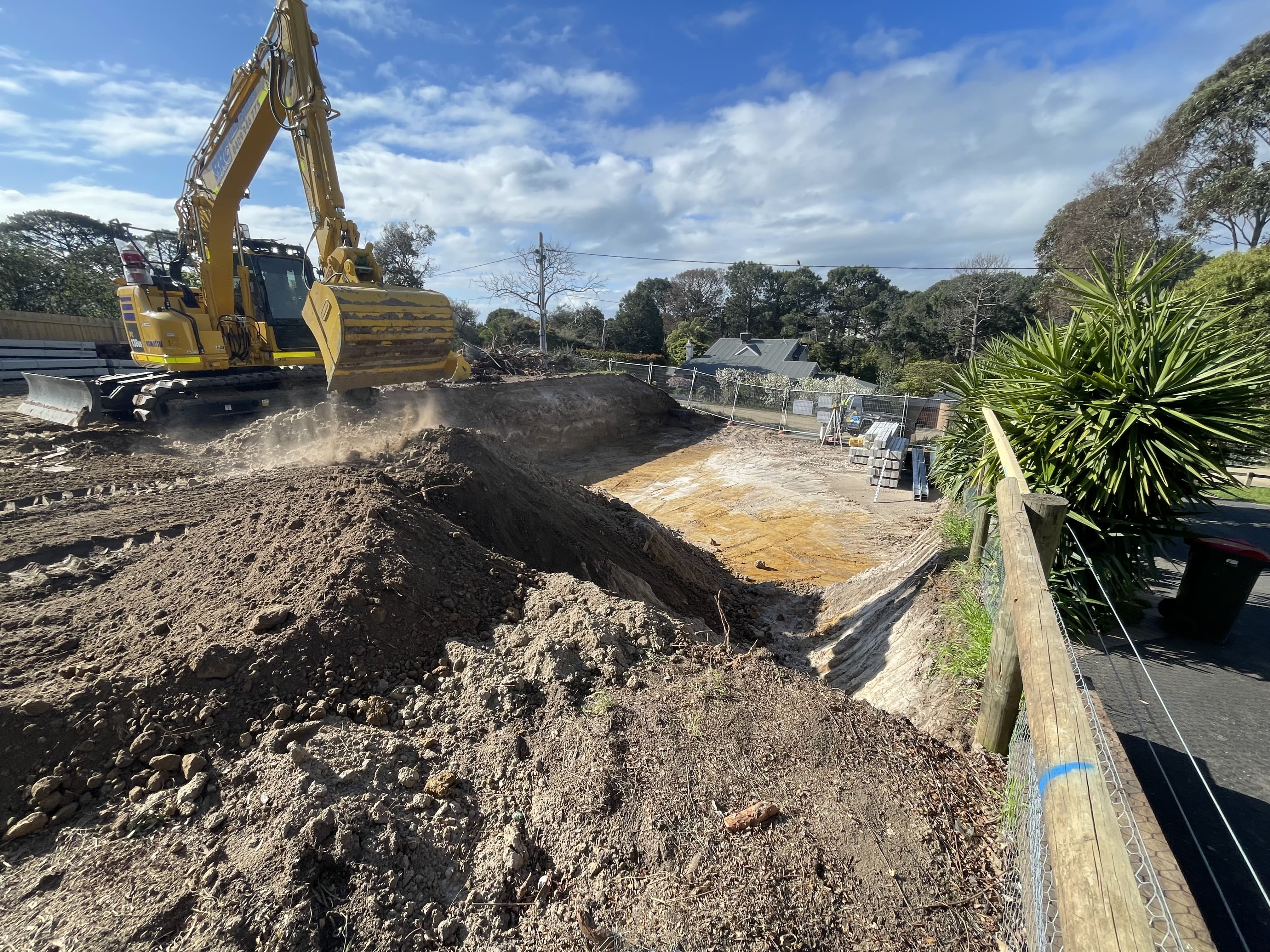
At TEMSEA, we approach every build with a strong foundation — both literally and in how we plan and sequence the work. This month, our Mount Martha two-storey new build has moved from planning to on-the-ground progress, where extensive excavation and site preparation works are shaping the home's structure and long-term performance. Our focus during this stage is on achieving precise ground levels, ensuring stability, and preparing for the next phase of underground services and structural works.
Site Access and Logistics: Building Safety from the Ground Up
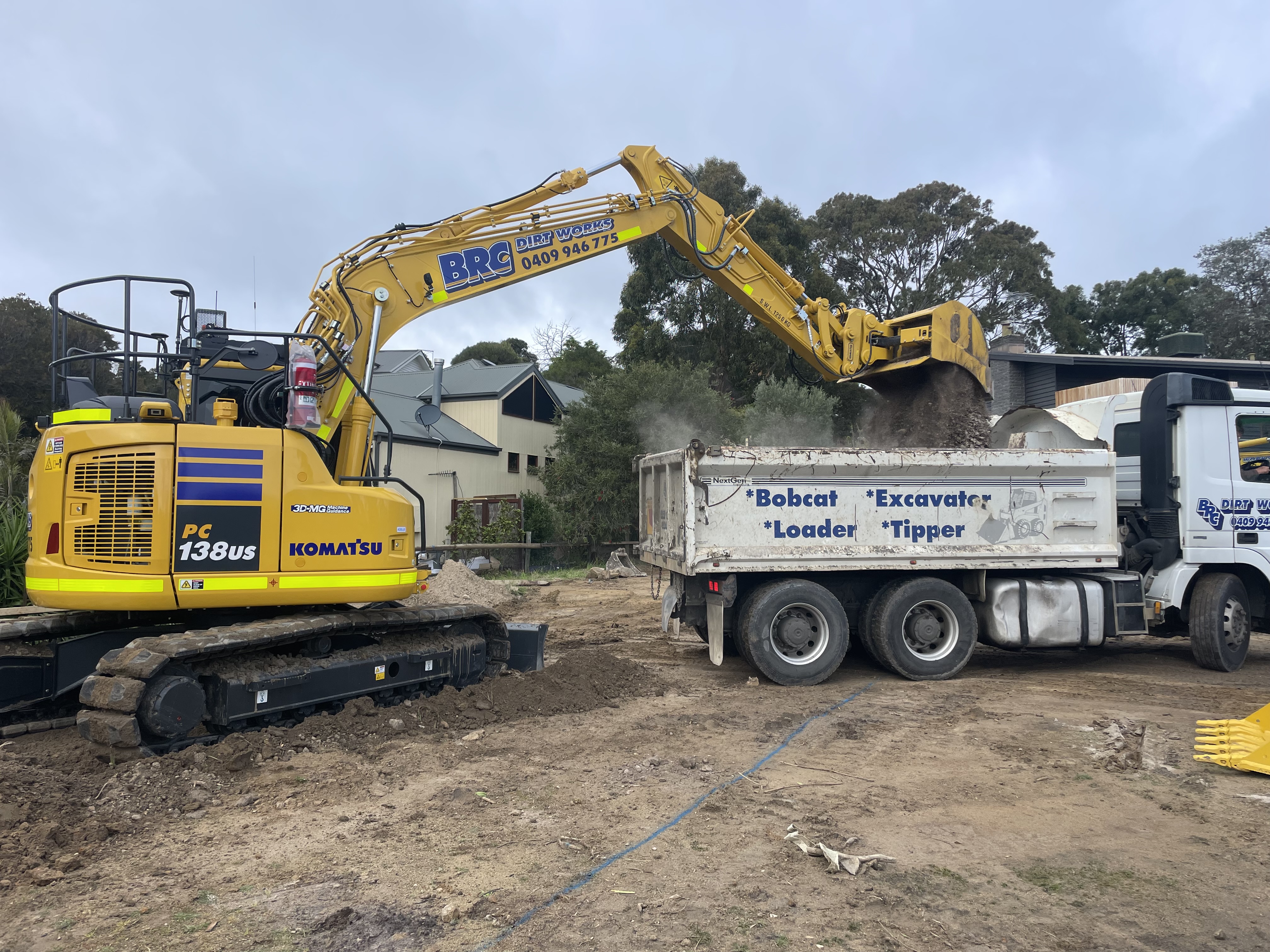
Before tackling the major earthworks, we ensured everything was in place for a smooth and safe build. This included installing a temporary rock driveway, compacted to withstand the weight of heavy vehicles and machinery.
This protects the site's soil structure from rutting and erosion and ensures reliable access during wet weather — a common challenge on the Peninsula. Establishing this kind of access early also supports safe working conditions for all trades on site. A well-prepared site is the foundation of a successful build, and it's something we take seriously from day one.
Groundworks and Excavation: Setting the Foundation for Structural Integrity
Precise excavation ensures structural stability, prevents future drainage issues, and sets the stage for every element above ground. For a site like Mount Martha, there were several conditions to understand before a bucket went in the ground.
Site-Specific Challenges in Mount Martha
The Mornington Peninsula's geology can vary dramatically within a single site — sandy loam in one area, reactive clay or granite just metres away. These variations directly influence how the soil behaves under load and when exposed to seasonal moisture.
Without proper assessment, this can lead to:
- Differential settlement (uneven sinking of foundations)
- Slab cracking or movement
- Drainage inefficiencies and water pooling
- Accelerated erosion in sloped sections
Before the first bucket of soil was removed, we carried out geotechnical testing and moisture management assessments to fully understand the conditions and the precautions required.
Following that assessment, we carried out a significant site cut — removing over 800 cubic metres of spoil — using a cut and fill approach to accommodate the home's garage and lower level. We cut into higher ground and used that material to fill lower areas, achieving a stable, balanced foundation while minimising the need for imported soil. The approach also supports site drainage and overall structural integrity going forward.
Retaining Wall Systems: Choosing the Right Support for the Site
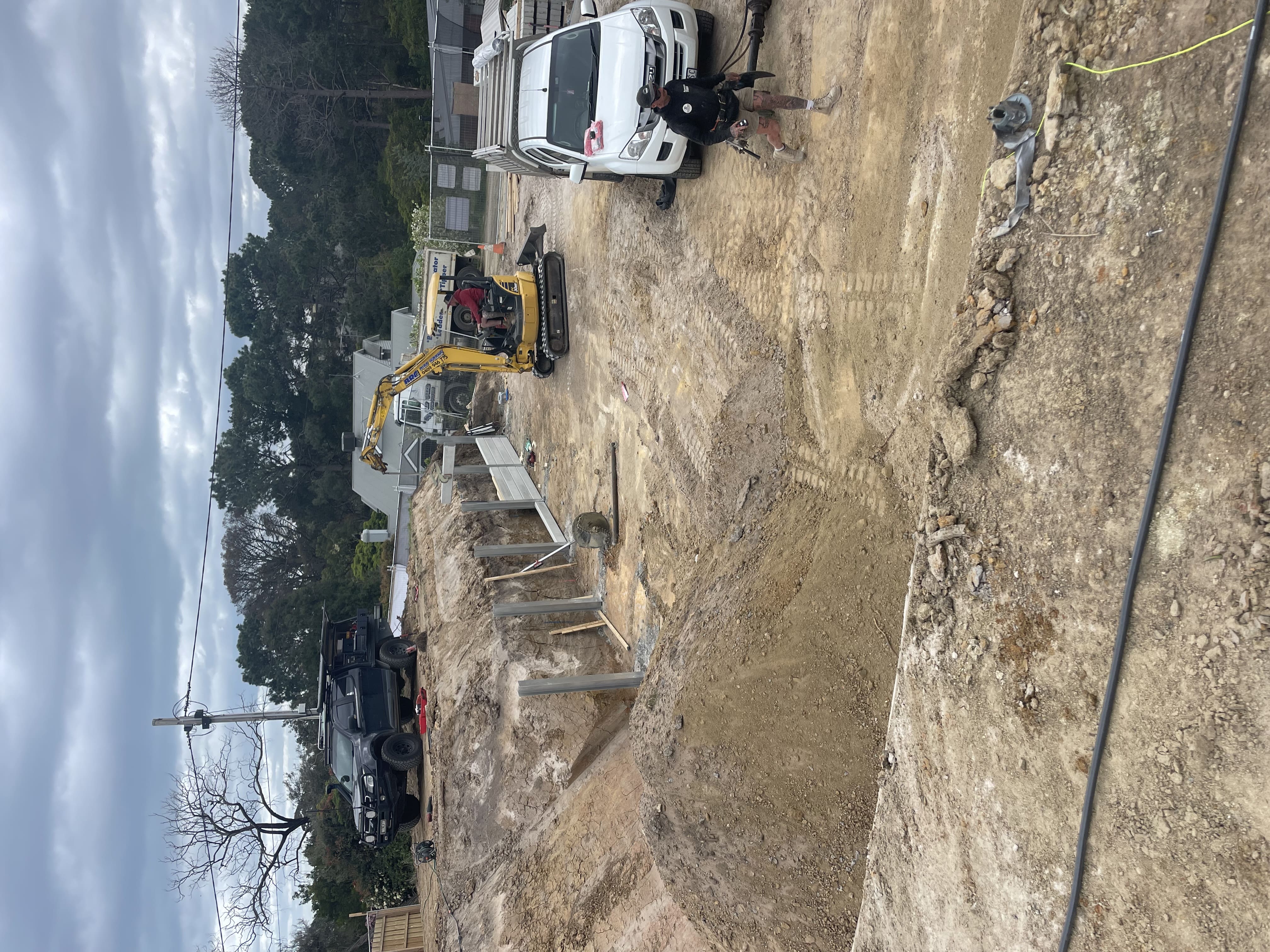
Retaining walls define how a landscape performs over time. For this Mount Martha build, we used concrete sleeper retaining walls for their structural strength and adaptability to the site's conditions.
Concrete sleepers are well suited to sloped or excavated sites because they provide high load-bearing capacity, resist soil pressure over time, and hold up against moisture and ground movement — all important factors in a coastal environment. They also integrate cleanly into both contemporary and natural landscapes.
We also incorporated batters — graded slopes that naturally stabilise the cut without requiring additional vertical walls. Compared to full-height retaining walls, batters reduce hydrostatic pressure and create a softer transition between the built form and the surrounding landscape. This hybrid approach balances engineering integrity with environmental sensitivity, reducing long-term maintenance in the process.
Encountering Granite: Understanding and Overcoming Geological Challenges
Mount Martha is well known for its granite formations, which can make deep footing work complex. During excavation for the deepest retaining wall footings — reaching a total of 6 metres (2.5m cut plus 3.5m footing depth) — our team encountered solid granite.
Granite presents specific challenges in foundation work:
- Its density and hardness make standard excavation tools ineffective
- Breaking through it requires specialised equipment such as rock breakers or core drills
- It slows progress and increases labour and equipment demands
- Proper drilling and footing depth are essential to maintain foundation stability
Rather than compromise on footing depth, we adapted our approach using a 13-tonne excavator with a core drill attachment. This allowed us to reach the required depth while maintaining the integrity of the surrounding rock and avoiding structural stress or cracking down the line.
Looking Ahead: From Groundworks to Underground Services
With excavation, retaining systems, and site access complete, the focus now shifts to the underground services phase — where plumbing, electrical, and drainage systems are laid with precision before the slab pour. Each phase brings us closer to delivering the client's vision for their coastal home — built to the standard it deserves. At TEMSEA, we treat every stage of construction as an opportunity to build better, with craftsmanship, foresight, and care at every level.
Start your Project with Temsea
.webp)