Passive Home Design: Building Science Fundamentals
Passive Home Design: Building Science Fundamentals
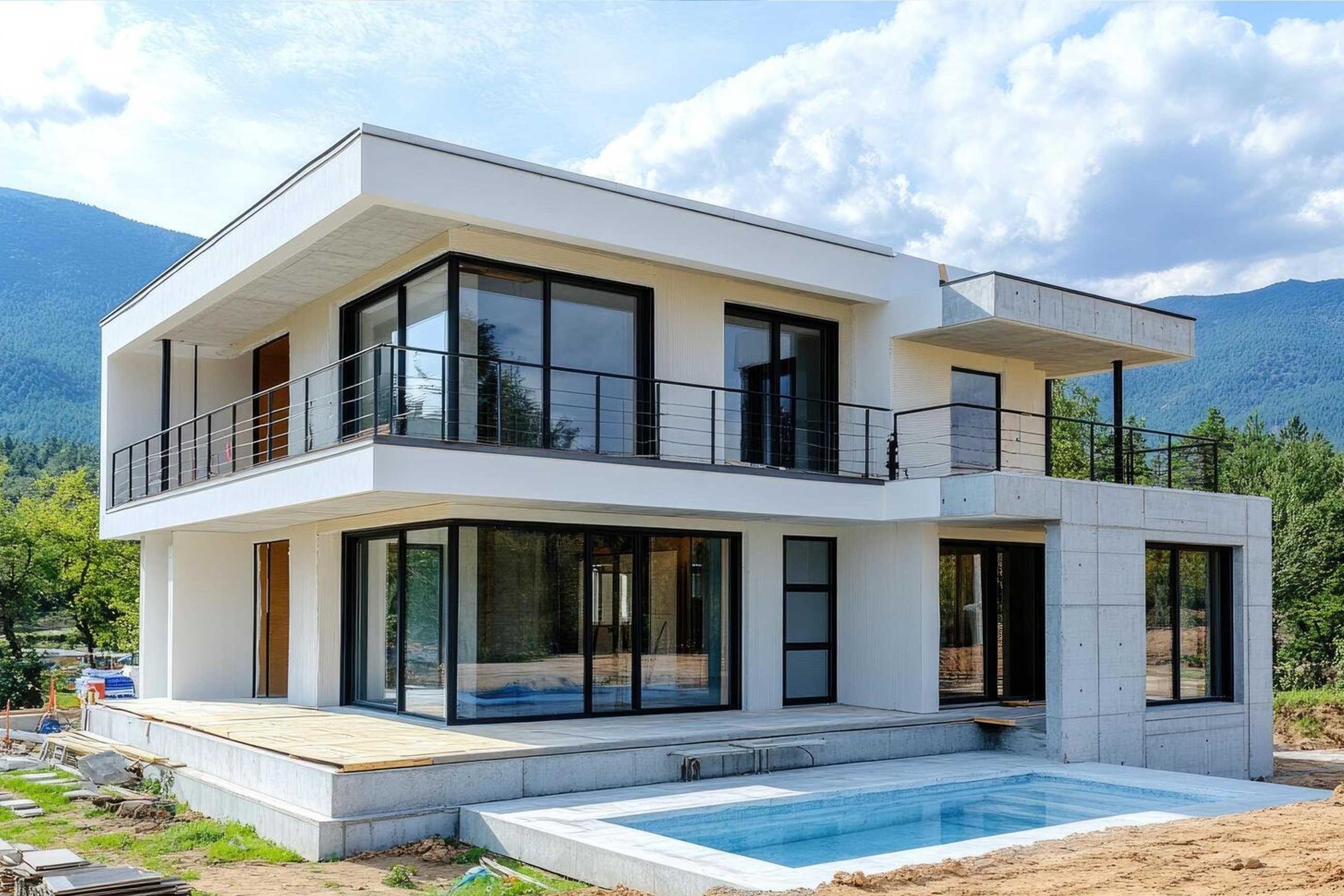
Luxury is often defined by what you see—marble benchtops, European appliances, custom joinery. But in high-end construction, true luxury is defined by what you don't feel. No drafts moving across the room. No cold floors in winter. No temperature fluctuations requiring constant adjustment of mechanical systems.
This is thermal equilibrium. It's the result of passive home design—a sophisticated engineering approach that maintains consistent comfort without fighting against the building's environment. Where active heating burns energy to overcome poor thermal performance, passive design uses physics to create a stable internal climate that requires minimal intervention.
On the Mornington Peninsula, where winter mornings can be sharp and coastal winds relentless, passive home design isn't just about sustainability credentials. It's about creating a home that performs predictably, costs less to run, and delivers comfort that active systems simply cannot replicate.
The Science Behind Passive Performance
Passive home design is built on three core principles:
- Minimize heat loss through high-performance insulation and airtight construction
- Maximize free solar gain through intelligent orientation and glazing placement
- Store thermal energy using materials that absorb and release heat slowly
When these principles work together, the result is a home that maintains comfortable temperatures year-round with dramatically reduced reliance on heating and cooling systems. This isn't theory. It's applied building science with measurable performance outcomes.
Solar Geometry: More Than Just "North Facing"
Everyone knows that north facing orientation matters. But understanding why it matters—and how to maximize its benefit—requires a deeper look at solar geometry.
How a Home Acts as a Solar Collector
During winter, the sun travels a lower arc across the northern sky. A properly oriented home captures this low-angle sunlight through north-facing glazing, allowing solar radiation to penetrate deep into the interior. This free energy warms floors, walls, and furnishings, which then radiate heat back into the space for hours after the sun has moved.
In summer, the sun's arc is higher and more overhead. The same north-facing windows that welcomed winter sun now receive minimal direct exposure during the hottest part of the day. Deep eaves, correctly calculated to the latitude of the Mornington Peninsula, provide natural shading that keeps interiors cool without blocking winter sunlight.
The Solar Heat Gain Coefficient (SHGC)
This is where passive home design moves from concept to measurable engineering. The Solar Heat Gain Coefficient quantifies how much solar radiation passes through glazing as heat. A higher SHGC means more solar gain, which is beneficial for north-facing windows in winter. A lower SHGC is preferable for western exposures that receive harsh afternoon sun.
Strategic SHGC Application:
- North-facing glass: Higher SHGC (0.6-0.7) to maximize winter solar collection
- West-facing glass: Lower SHGC (0.3-0.4) to minimize summer heat gain
- East and south exposures: Balanced SHGC based on shading and view priorities
This level of specification isn't standard practice. It's the difference between a home that feels comfortable naturally and one that requires constant mechanical adjustment.
Calculating Solar Orientation
On the Mornington Peninsula, true north differs from magnetic north by approximately 11 degrees. Precision matters. A north facing living area that's actually oriented 20 degrees west will overheat in late afternoon. One rotated 20 degrees east will miss peak solar collection hours.
Passive home design requires surveyed site analysis and solar modeling to ensure orientation is mathematically optimized, not assumed.
The Thermal Battery: Under Slab Insulation
Concrete floors are frequently discussed as thermal mass—materials that absorb heat during the day and release it slowly at night. But thermal mass only functions effectively when paired with under slab insulation. Without it, you're not storing heat. You're losing it to the earth.
The Cold Sink Effect
An uninsulated concrete slab sits directly on the ground. Soil temperatures in Victoria range from 12-18°C year-round—cooler than the interior comfort zone of 20-22°C. Without a thermal barrier, heat conducts from the warmer slab into the cooler earth below. This is the cold sink effect.
The result? Cold floors that require underfloor heating to feel comfortable, which defeats the purpose of passive design by adding ongoing energy costs.
How Under Slab Insulation Creates a Thermal Battery
High-density expanded polystyrene (EPS) or extruded polystyrene (XPS) insulation installed beneath the concrete slab prevents heat loss to the ground. The slab becomes thermally isolated, allowing it to absorb solar energy during the day and retain that warmth well into the evening.
Performance Specifications:
- R-value: Minimum R2.0 under slab insulation for coastal Victoria
- Thickness: 50-75mm high-density foam depending on climate zone
- Edge insulation: Critical for preventing thermal bridging at slab perimeters
- Moisture barrier: Essential beneath insulation to prevent ground moisture migration
The Sensation of Passive Warmth
The difference is immediately perceptible. A thermally isolated slab maintains ambient warmth underfoot without active heating. Solar gain absorbed through north facing glazing radiates into the concrete, which holds that energy for 6-8 hours after the sun has set. The floor becomes a gentle, consistent heat source that moderates the entire interior climate.
This eliminates the need for energy-hungry underfloor heating systems while delivering superior comfort. There are no hot spots, no cold zones, just stable thermal equilibrium.
The Airtight Seal: uPVC Double Glazed Windows
Glazing is the weakest thermal point in any building envelope. A poorly specified window can lose more heat than an entire insulated wall. This is where uPVC double glazed windows become non-negotiable in passive home design.
Why Aluminum is the Enemy of Passive Design
Aluminum is a conductor. It transfers heat rapidly, which is exactly what you don't want in a window frame. During winter, aluminum frames become cold bridges—pathways for interior warmth to escape directly to the outside. During summer, they conduct exterior heat into the home.
The result is condensation, discomfort near windows, and significant thermal loss that undermines the entire passive strategy.
How uPVC Acts as a Thermal Break
uPVC (unplasticized polyvinyl chloride) is a thermal insulator. It doesn't conduct heat. When used as a window frame material, it creates a barrier that prevents thermal energy from transferring between interior and exterior environments.
uPVC Double Glazed Window Performance:
- Frame U-value: 1.4-1.8 W/m²K (compared to 5.0+ for standard aluminum)
- Multi-chamber profile: Internal air pockets provide additional insulation
- Airtight seals: Compression gaskets eliminate drafts and air leakage
- Thermal stability: No expansion/contraction issues affecting seal integrity
Combined with double glazing (two panes of glass separated by an argon-filled cavity), uPVC windows achieve U-values as low as 1.2 W/m²K—representing a dramatic reduction in heat transfer compared to single-glazed aluminum frames.
Coastal Protection: A Material Built for Salt Environments
The Mornington Peninsula's salt-air environment accelerates corrosion in metal frames. Powder coating on aluminum eventually degrades, leading to pitting, discoloration, and compromised seals.
uPVC is chemically inert. Salt has no effect on it. It won't corrode, won't require repainting, and won't degrade under UV exposure. It's a "fit and forget" material that performs consistently for decades without maintenance.
For coastal properties where renovation cycles are expensive and disruptive, this durability isn't just convenient—it's a significant long-term cost saving.
Energy Performance in Numbers
A typical home on the Mornington Peninsula with standard aluminum single-glazed windows can lose 25-30% of its heating and cooling energy through glazing alone. Upgrading to uPVC double glazed windows reduces that loss to 8-12%.
Over a 20-year period, the energy savings—combined with reduced HVAC system sizing and lower operational costs—offset the initial material investment. More importantly, the thermal comfort improvement is immediate and ongoing.
Acoustic Luxury: The Silent Side Effect
Passive home design isn't just about temperature. It's about sound.
How Airtightness Creates Acoustic Isolation
An airtight building envelope—essential for thermal performance—is also an acoustic barrier. Sound waves travel through air gaps. Eliminate the gaps, and you eliminate sound transmission.
Acoustic Benefits of Passive Construction:
- uPVC double glazed windows with laminated glass reduce external noise by 30-40 decibels
- Insulated wall cavities absorb sound vibrations from wind, rain, and nearby activity
- Sealed penetrations around doors, vents, and services prevent sound leakage
- Concrete floors with carpet or timber overlays dampen impact noise between levels
The Coastal Wind Silence
On exposed sites facing Bass Strait, wind noise can be relentless. Standard construction allows wind to create pressure differentials that rattle windows, whistle through gaps, and transmit structural vibrations throughout the home.
A passive home design envelope eliminates these pathways. The interior becomes a sanctuary—completely isolated from the roar of coastal storms. This isn't an incidental benefit. For many Peninsula residents, it's the most immediately noticeable improvement in daily living quality.
The Value of Silence
Acoustic comfort is rarely quantified, but it has measurable effects on stress, sleep quality, and overall wellbeing. A home that blocks external noise provides:
- Better sleep without wind or traffic disturbance
- More productive work-from-home environments
- Reduced cognitive fatigue from constant background noise
- Increased privacy between rooms and levels
Passive home design delivers this performance as a standard outcome of the thermal strategy. You're not paying extra for acoustic upgrades. You're getting them as part of the integrated building science approach.
The Intelligent Investment
Passive home design is the ultimate marriage of physics and craftsmanship. It's an invisible layer of luxury that pays dividends in comfort, energy costs, and long-term durability.
What Passive Performance Delivers
Thermal Comfort:
- Stable interior temperatures without constant mechanical adjustment
- Warm floors in winter, cool interiors in summer
- Elimination of drafts and cold zones
Operational Savings:
- 40-60% reduction in heating and cooling costs
- Smaller HVAC systems with lower capital and maintenance costs
- Reduced reliance on grid electricity during peak pricing periods
Environmental Durability:
- Materials like uPVC double glazed windows that resist coastal corrosion
- Under slab insulation protecting foundations from moisture and thermal stress
- Long-term performance without degradation or frequent replacement
Acoustic Sanctuary:
- Dramatic reduction in external noise transmission
- Peaceful interiors regardless of coastal wind conditions
- Improved sleep quality and daily comfort
Beyond Sustainability Credentials
Passive home design isn't about sustainability credentials or green building certifications. It's about creating a home that performs predictably, costs less to run, and delivers comfort that active systems cannot replicate.
For discerning homeowners on the Mornington Peninsula who understand that true luxury is defined by what you don't feel—no drafts, no cold floors, no temperature fluctuations—passive design is the only intelligent approach.
Design Your High-Performance Passive Home
At TEMSEA, we integrate passive home design principles into every build. From precise north facing orientation and under slab insulation to uPVC double glazed windows engineered for coastal conditions, we deliver thermal performance that transforms how a home feels to live in.
Ready to discuss the technical specifications of your next high-performance build?
Contact us today to explore how passive design can deliver invisible comfort and measurable savings.